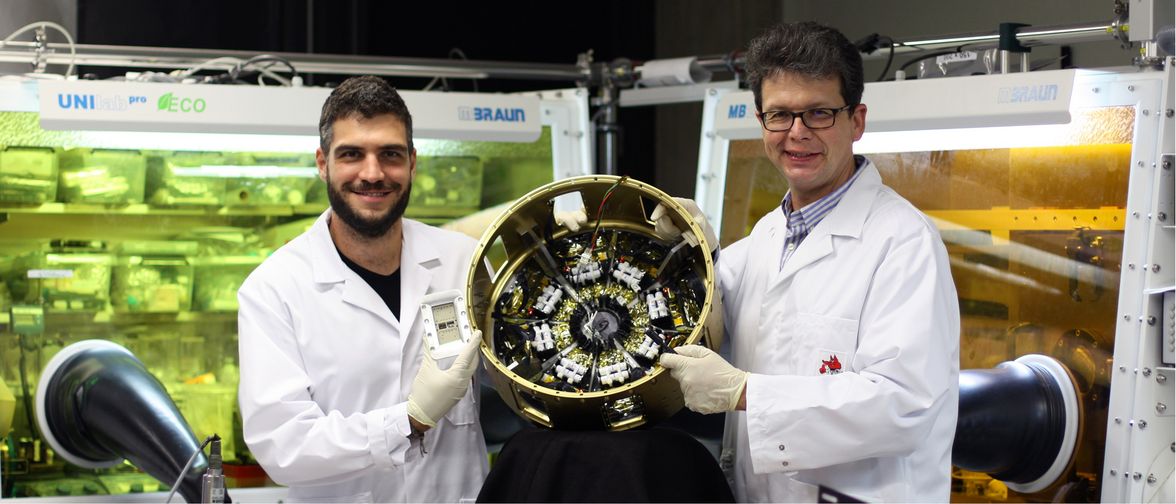
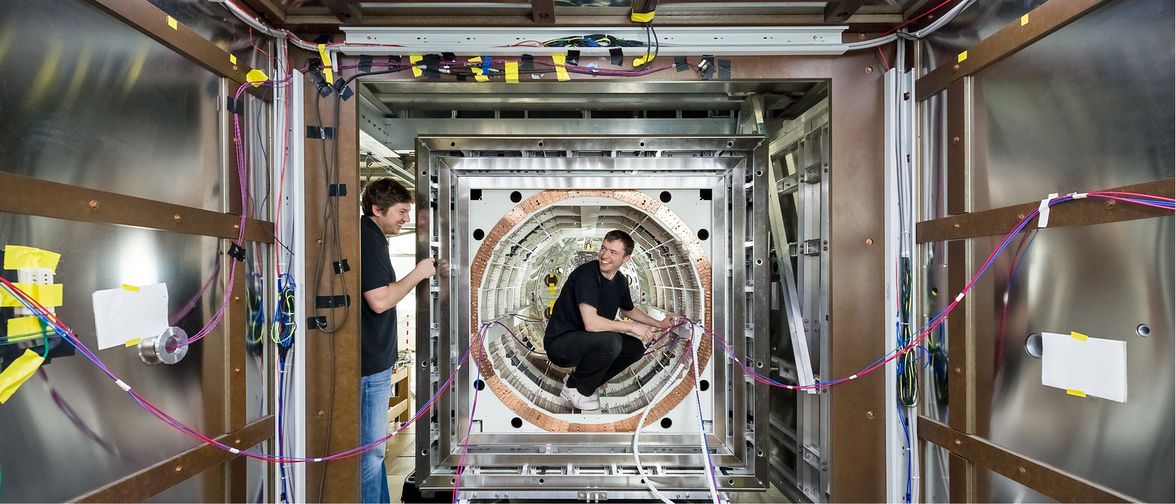
Three out of ten detector modules of the exploratory experiment STRAW-b for the investigation of the Pacific Ocean in preparation for the planned neutrino telescope P-ONE. Image: Simon Freund / TUM
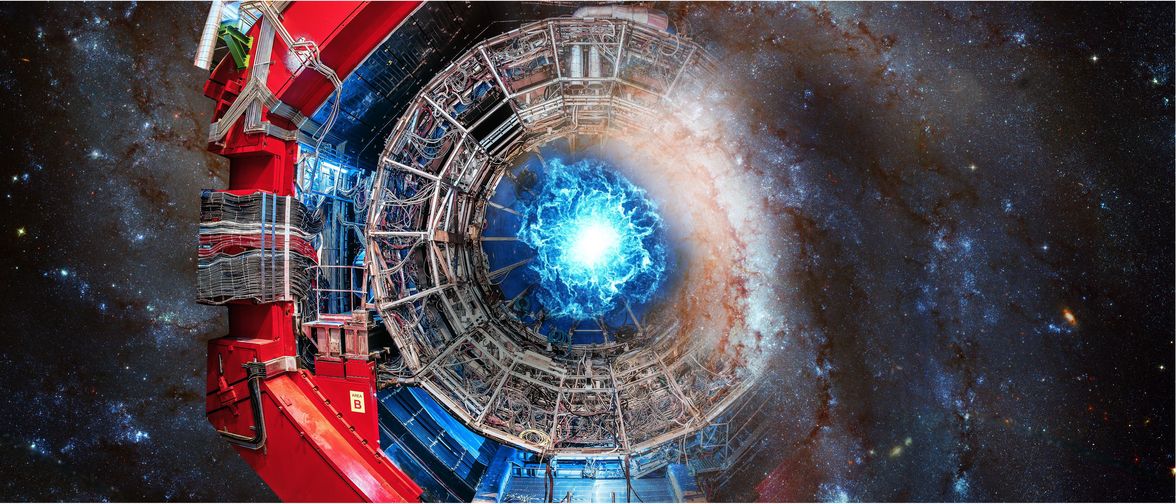
Artistic depiction of antihelium annihilation in the ALICE detector at CERN and in the universe. Photo: ORIGINS Cluster/S. Kwauka
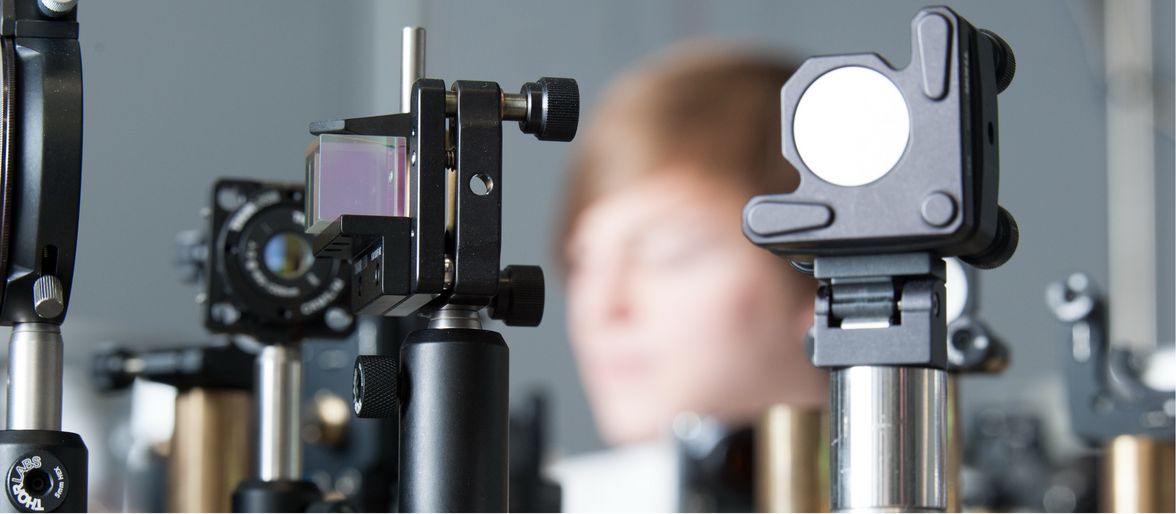
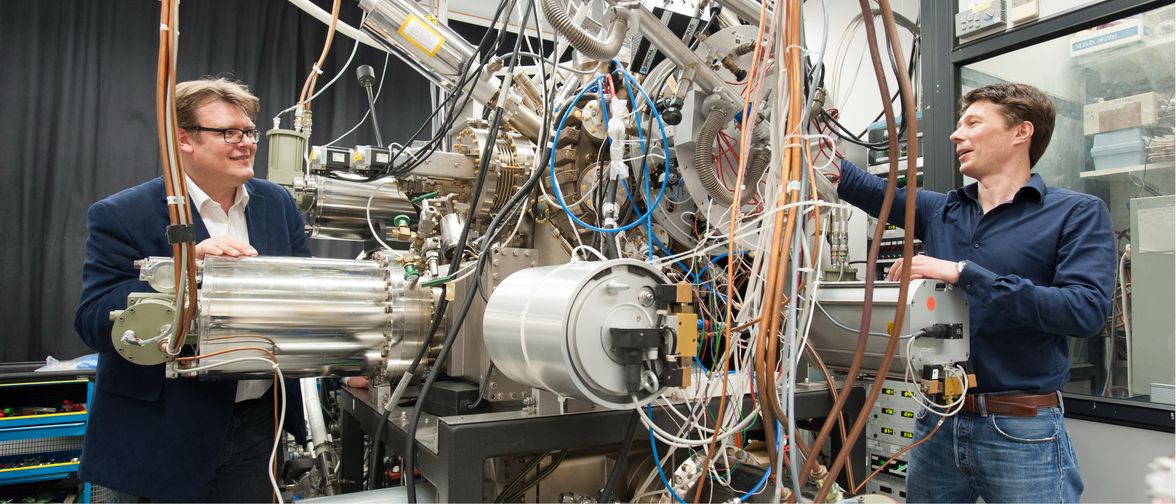
TUM Research on nanophotonic systems. Photo: Wolfgang Filser / TUM
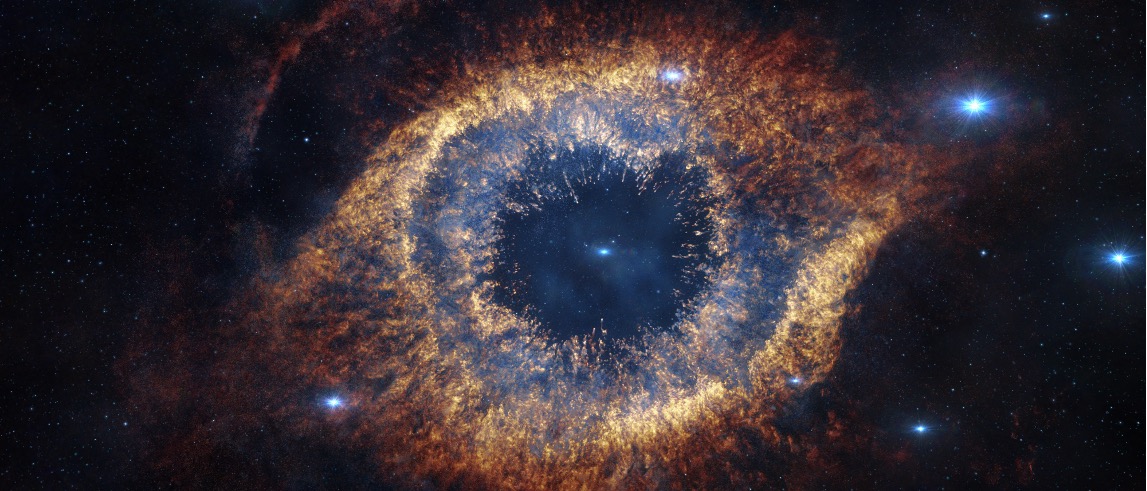
The infrared image shows the Helix Nebula, located 700 light-years from Earth, captured by a telescope of the ESO, one of the partners in the ORIGINS Excellence Cluster. The cluster investigates the origins of the universe and the first life. Image: ESO / VISTA / J. Emerson
Magnetically shielded room of the nEDM experiment in the east hall of FRM II. Image: Astrid Eckert / TUM
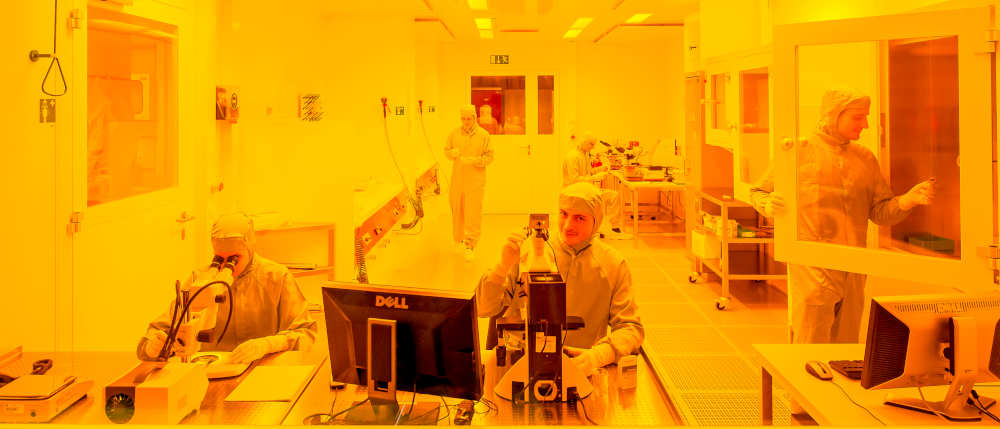
In ZNN's clean room nanoscale materials and circuits are built. Image: A. Eckert / TUM
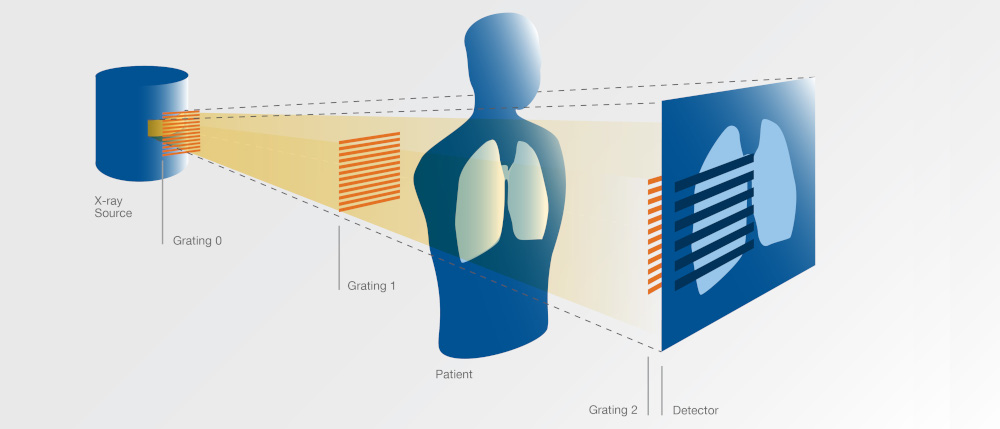
Schematic of a device for x-ray dark field imaging. Image: ediundsepp Gestaltungsgesellschaft / TUM
Slide 1 of 13
Physics on Campus Garching
We investigate the fundamental principles that govern nature, exploring topics that span "from the smallest to infinity". Our researchers study the structure of matter, the forces shaping our world, the origins and evolution of the cosmos — including challenges like dark energy — and the quantum informational foundations of physical systems.